Get Implant-Supported Dentures
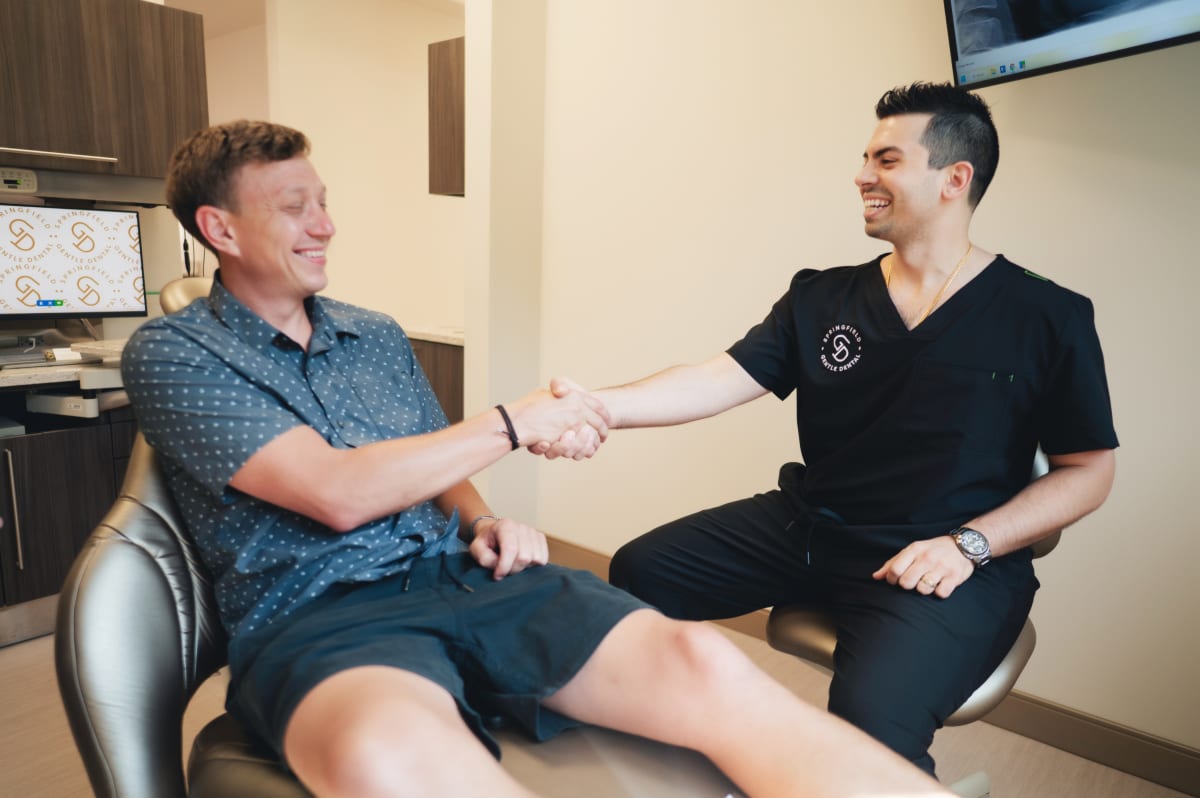
Implant-Supported Dentures at Springfield Gentle Dental
If you spend more energy keeping your dentures in place than actually enjoying your food, you've probably hoped (and figured out) that there's a better way.
Implant-supported dentures are a full arch of replacement teeth anchored directly to dental implants in your jawbone, so they hold firm while you eat, talk, and smile. No paste, no slipping, no second-guessing yourself at dinner.
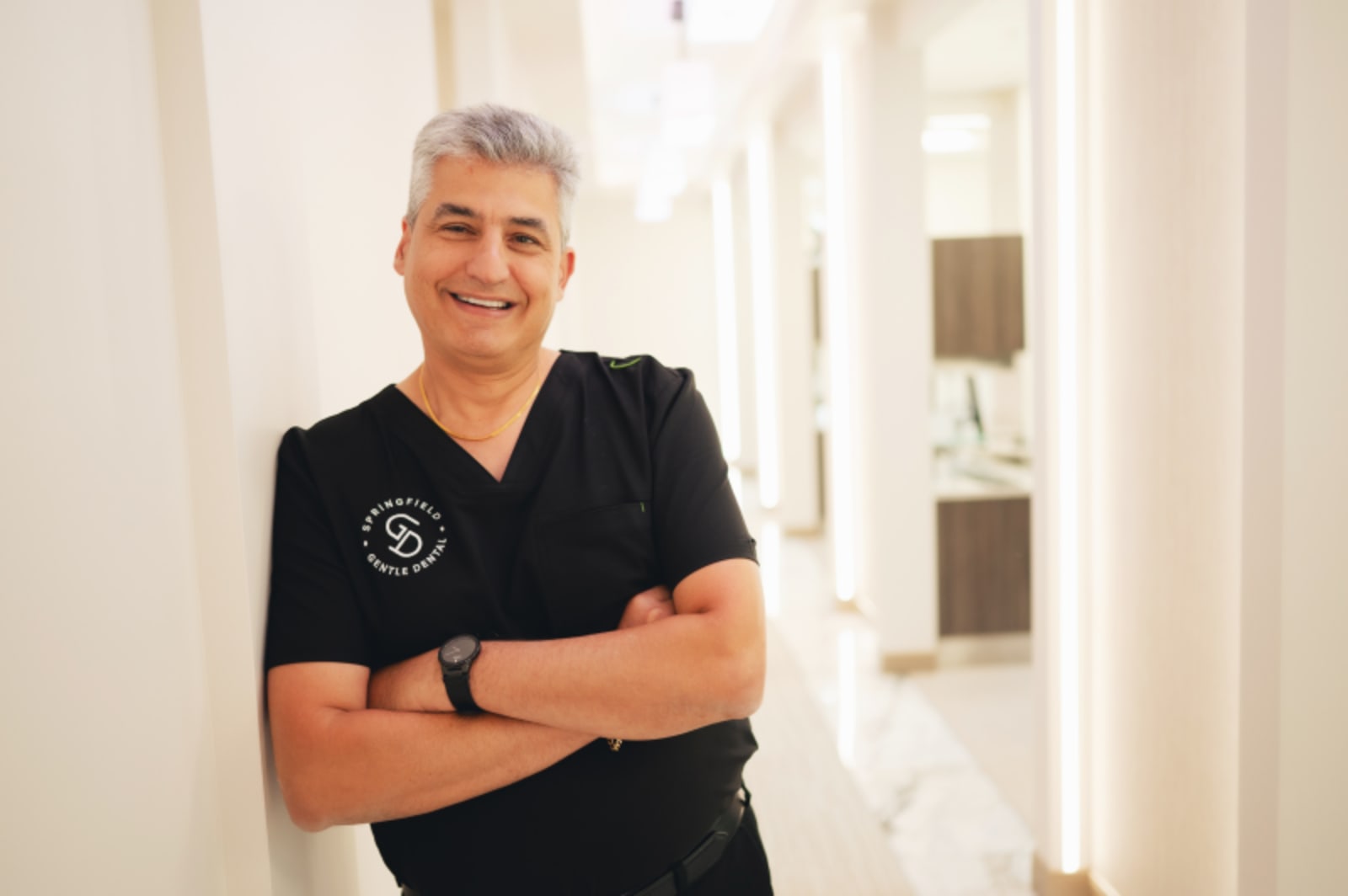
Dr. Tab and Dr. Nezhad place these right here in Springfield for patients who want something that feels like their own teeth again. Dr. Nezhad completed the Midwest Implant Institute externship and continues his education through the Kois Center curriculum, one of the most rigorous post-graduate programs in dentistry. That commitment to ongoing learning shapes how thoughtfully we plan and place every case.
Whether implant-supported dentures are the right fit depends on your bone, your oral health, and your goals. Give us a call at (937) 399-6177 and we'll find a time that works for you.
Quick Takeaways
- Implant-supported dentures use dental implants anchored in your jawbone to hold a full arch of teeth firmly, instead of resting on your gums.
- They come in two forms: removable dentures that snap onto implants, and fixed dentures that stay put like natural teeth.
- Candidacy comes down to bone density, oral health, and general health, all confirmed with a cone beam scan at your first visit.
- Told years ago you didn't have enough bone? It's worth asking again. Bone grafting has changed what's possible.
- Plan for several months and a handful of visits, from imaging to your final teeth. The starting point is a consultation.
How These Compare to Traditional Dentures
The question underneath all the clinical talk is usually the simple one: will this actually make my days easier? Anchoring the denture to implants changes how it behaves in exactly the ways you'll notice.
Traditional dentures sit on your gums and rely on suction or adhesive to stay put. That works fine for some people, but plenty deal with shifting during meals, foods they've quietly given up on, and a fit that loosens year after year. That loosening isn't bad luck. When teeth are gone, there's no root left to stimulate the jaw, so the bone slowly shrinks and the denture stops matching your gum line.
Implants act like artificial roots. They keep the jawbone working and the fit steady over time. Most people find they can eat what they want again and stop paying attention to their teeth mid-conversation.
There are two setups worth knowing:
- Implant-retained (removable): the denture snaps onto the implants and lifts out for cleaning.
- Fixed implant-supported: the teeth stay anchored in place and behave much like your own.
Which one suits you depends on your bone structure, your goals, and how you'd rather handle daily care. We work that out together before anything gets scheduled.
Are You a Candidate?
The only honest way to know is a proper evaluation. When you come in, we look at three things:
- Jawbone density and volume, mapped with a cone beam scan so we can see exactly what we're working with.
- Overall oral health, including any remaining teeth and the condition of your gums.
- Your general health history, which affects healing, how well the implants integrate, and the order we tackle things.
Bone is what people ask about most. If a dentist told you years ago that you didn't have enough for implants, that door may not be shut anymore. Grafting has opened up treatment for a lot of people who once heard no.
Dr. Tab and Dr. Nezhad review every case using real imaging and a full health picture, not guesswork. Most people leave that first visit with a much clearer sense of where they stand and what's possible.
What the Process Looks Like
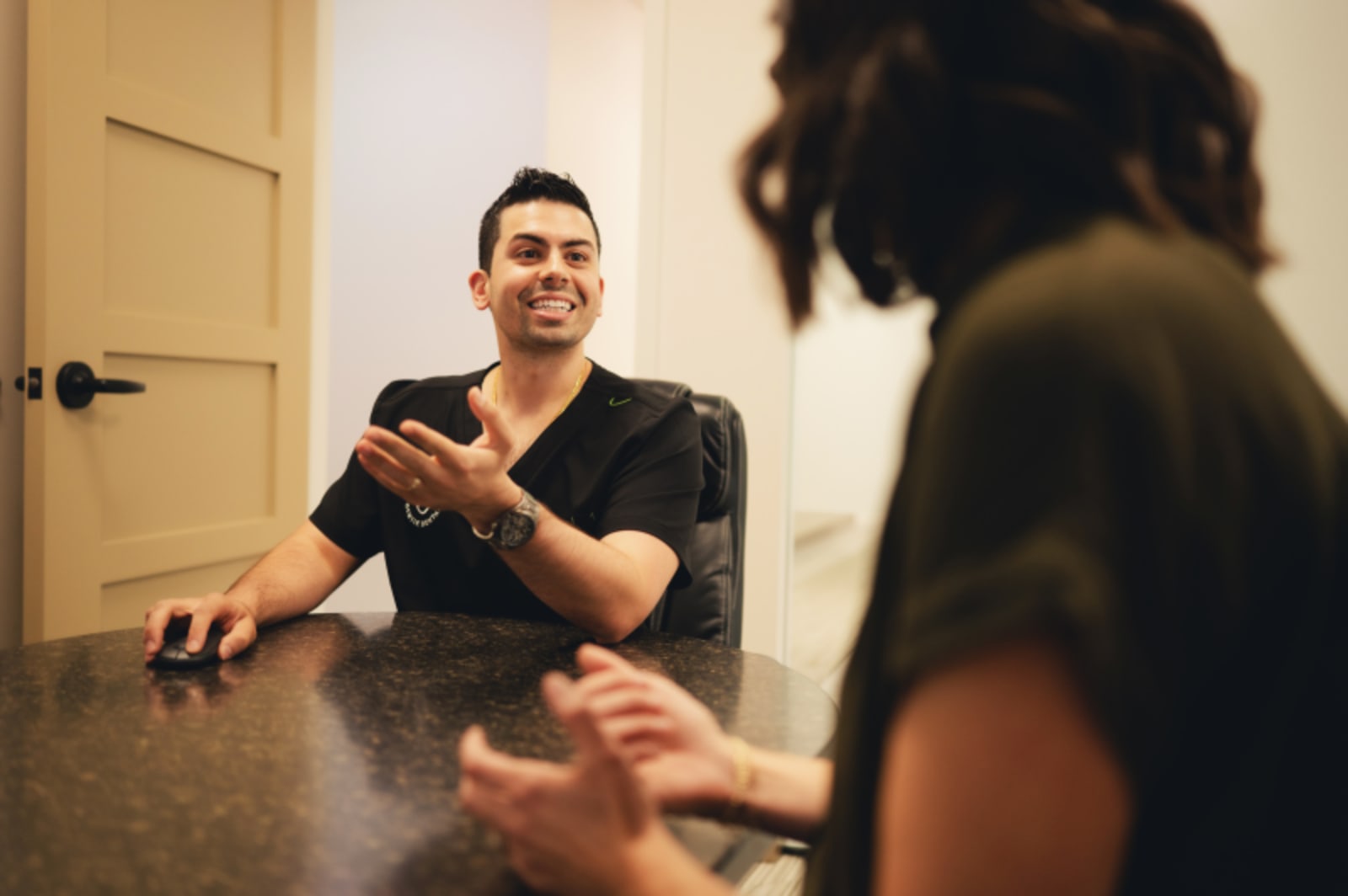
We handle every stage in-house, so you're with the same team from the first scan through the day your final teeth go in.
- Consultation and imaging: your first visit includes a CBCT scan and a close look at your bone, bite, and oral health.
- Treatment planning: we walk through what we found, what's realistic, and the full cost and payment options, all before a single appointment is booked.
- Implant placement: the surgical visit is done by our doctors, who carry dedicated implant training. We make sure you're fully numb before anything starts.
- Healing: the implants need time to fuse with the bone before your final teeth go on, and that pace differs from person to person. You'll get a timeline built on your own healing, not a generic estimate.
- Final restoration: once the implants have integrated, we scan and build your denture or crown attachment.
A lot of folks tell us they braced for the worst and found the whole thing far more manageable than they'd feared. Good anesthesia and a steady pace make most of the difference.
The Benefits You'll Actually Feel

- They stay put. No adhesives, no worrying about a slip while you're talking or out to eat.
- You get more foods back. A stable, anchored bite lets you enjoy meals that loose dentures made difficult.
- They protect your jaw over the long term. Implants stimulate the bone the way natural roots do, so your fit stays reliable as the years go by.
- They look and feel natural. The result is snug, proportional, and designed to blend with your face.
- They're built to last. Cared for well, implants can serve you for decades, so you're not starting over every few years.
- They're easy to live with. Fixed options stay anchored in place. Removable ones snap out for simple cleaning.
Preparing and Caring for Your New Teeth
When you come in for your consultation, bring a list of your current medications and a clear picture of what hasn't been working with your current situation. If treatment moves forward, we'll walk you through exactly what to expect for the surgical visit and the first couple of days of recovery.
Day-to-day care is simpler than most people expect. Removable dentures snap out for cleaning. Fixed ones get brushed and maintained much like natural teeth, with a few extra steps to keep the tissue around the implants healthy. Regular checkups let us stay on top of the fit and catch anything early before it becomes a problem.
Cost, Insurance, and Financing
Implant-supported dentures are a real investment, and what you'll pay depends on a few things specific to your situation:
- How many implants your restoration needs
- Whether you need bone grafting beforehand
- The type of final restoration you choose
Because every case is different, we won't quote a number before we understand what you're working with. Before any treatment begins, we sit down and go through the full cost picture together so there are no surprises. That's a commitment we make to every patient.
We accept most PPO plans and check your benefits ahead of time. Some plans cover portions of implant treatment; others classify it as a cosmetic exclusion. We're also in the process of moving out of network with some carriers, but we give patients at least six to eight months notice before dropping any plan. We don't like surprises either.
If your coverage comes up short, our in-house smile plan is a straightforward option for patients without insurance. Financing is available too, so you can spread payments over time if that works better for your situation.
Why Patients Choose Us for Implants
- Technology that works for you. Cone beam imaging and intraoral scanning give us a precise picture of your anatomy before we ever begin, so your treatment plan is built on real information.
- Everything under one roof. From your first scan to crown delivery, your care stays with one team. That includes supporting surgical work like bone and sinus grafting when it's needed.
- A place where you'll actually feel comfortable. Patients who'd avoided the dentist for years tell us they felt at ease from the moment they walked in. We're the largest practice in the Springfield area, with more than 30 years of local roots and a brand-new facility we opened in 2024.
Frequently Asked Questions
How is an implant-supported denture different from All-on-4?
All-on-4 is one specific technique, where a full arch is anchored by four carefully placed implants. Implant-supported dentures is the wider category it belongs to, covering different numbers of implants and whether the teeth are fixed or removable. We'll help you figure out which approach fits your anatomy and goals.
How long does the full process take?
The process section walks through the full timeline, which is built around your own healing rather than a generic estimate. A couple of things can extend it: needing bone grafting first, or building room around your schedule and finances. You'll get a realistic picture at your first visit.
Does dental insurance cover implant-supported dentures?
It varies by plan. Some PPO plans cover portions of the treatment; others treat implants as a cosmetic exclusion. We check your benefits before treatment and go over the full picture together.
What if I've been told I don't have enough bone?
That's one of the most common things people bring up, and it's often not the final word. Bone grafting has made implants possible for many people who once heard no, and a CBCT scan lets us tell you honestly what's realistic for you.
Are they removable or fixed?
Both exist. Some snap onto the implants and come out for cleaning; others stay fixed and function much like natural teeth. The right choice depends on your bone structure, preferences, and long-term goals.
Will they feel like my real teeth?
Because they're anchored in bone rather than resting on your gums, most people find they feel far closer to natural teeth than traditional dentures ever did, especially when chewing and speaking.
Ready to Find Out If This Is Right for You?
A consultation is a no-pressure conversation where you can ask whatever's on your mind, see your options laid out clearly, and leave with a real understanding of what a plan would look like for you. Dr. Tab and Dr. Nezhad genuinely enjoy these visits.
Call us at (937) 399-6177 to find a time that works. We're here Monday through Thursday from 8:00 to 5:00 and Friday mornings until noon, right on North Limestone Street in Springfield.
we're ready to serve you
Step into your ideal dental experience and call (937) 399-6177 or request an appointment online to set up your first visit. We’ll be in touch soon.