Full Mouth Reconstruction in Springfield
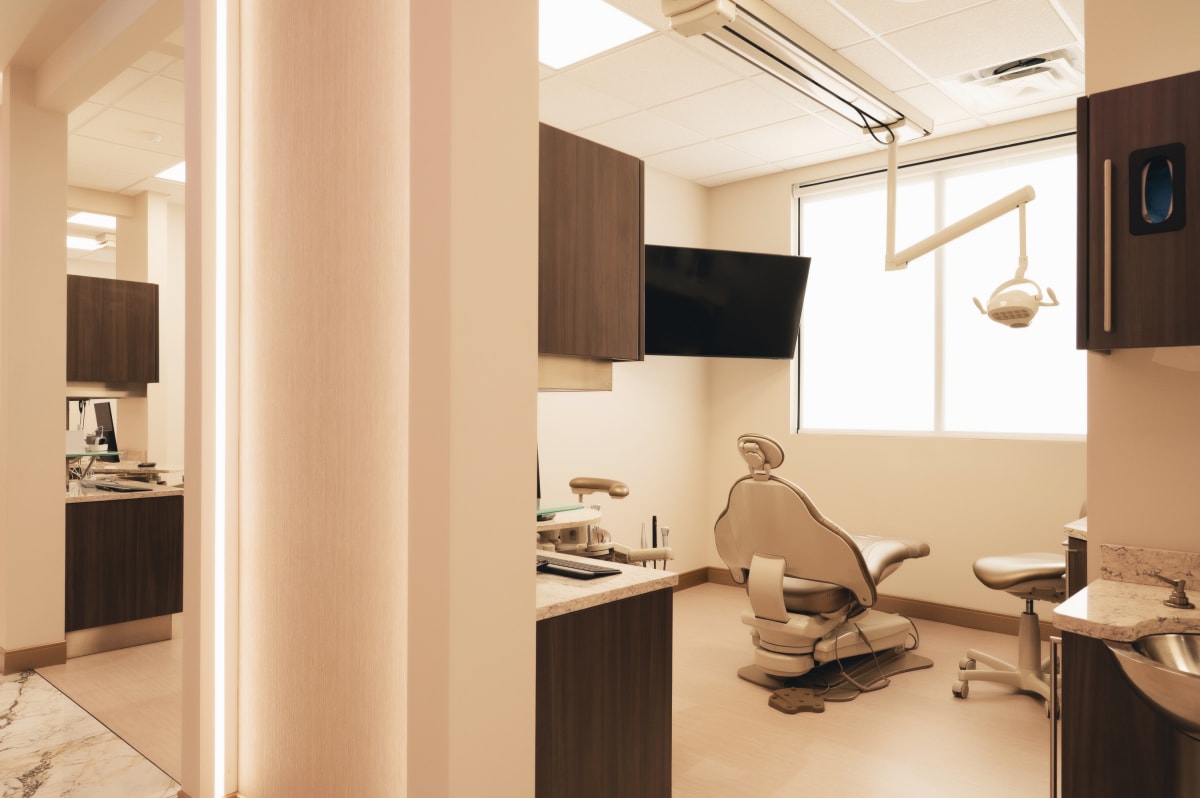
Full Mouth Reconstruction in Springfield, OH
If your teeth need serious work and you've been putting it off, you're in good company.
A lot of people who come to Springfield Gentle Dental already know something's wrong; they just feel stuck on where to begin. Full mouth reconstruction is how we untangle that. It isn't one procedure but a coordinated plan that rebuilds how your teeth look, feel, and work, using whatever mix of implants, oral surgery, and restorative dentistry your situation actually calls for.
Dr. Tab, Dr. Nezhad, and Dr. K, along with our whole team, handle these cases to
gether under one roof, so your care is planned and finished in the same place. We serve Springfield and the surrounding communities, and every reconstruction starts the same way. We figure out how your teeth got here, then map a realistic path forward.
Curious what that path might look like for you? Give us a call at (937) 399-6177 and we'll talk it through.
Quick Takeaways
- Full mouth reconstruction is a personalized plan, not a single treatment. It may combine dental implants, oral surgery, and restorative work depending on what you need.
- When implants are involved, expect a longer timeline, because bone needs time to heal around them.
- Everything happens under our roof, with three doctors coordinating, so your records and your plan don't get fragmented across separate clinics.
- Dr. Nezhad trained through the Midwest Implant Institute externship and is pursuing the Kois Center curriculum, one of the most demanding evidence-based programs in dentistry. That training shapes how our complex cases are planned.
- The consultation is your real starting point. We look at the full picture, then walk you through the plan and the costs before anything gets scheduled.
What You Gain From Full Mouth Reconstruction
Reconstruction takes real time and real commitment. Here's what you get on the other side of it:
- Comfortable chewing again. Eating without mentally working around a sore spot or a gap is one of the first things patients notice, and it's a big deal.
- A smile you're happy to show. Smiling without a second thought is a completely realistic goal, and it's one we hear often.
- Better long-term oral health. Replacing failing teeth and correcting a bad bite takes pressure off everything else that's still doing its job.
- Durable results. Well-maintained implants can last a lifetime. They're the closest thing we have to growing a tooth back.
- Function and appearance together. The goal is teeth that look good and let you stop thinking about them. One without the other isn't really a complete answer.
Who Full Mouth Reconstruction Is Really For
Most people who come in for reconstruction already sense that a single filling or one new crown won't be enough. They're just not sure their situation is serious enough to need this level of care.
Reconstruction is built for situations that go well beyond one tooth. You might need it if you're experiencing:
- Several missing teeth that affect how you chew, speak, or feel about smiling
- Widespread decay, especially after years away from the dentist
- A bite that feels off, strains your jaw, or has shifted over time
- Old crowns, bridges, or fillings that are failing one after another
- Some combination of the above, and you're not sure where to begin
Plenty of people arrive here saying "I know my teeth are bad" and leave that first visit with something they weren't expecting: a clear picture of what's actually going on and a plan that feels manageable. There's no judgment here. Because our doctors coordinate on complex cases, you get more than one experienced perspective on your situation.
If your concerns are limited to one area, you may need something more focused than a full reconstruction, and we'll tell you that honestly. The only way to know is a proper evaluation, and that's exactly what the consultation is for.
How the Treatment Comes Together
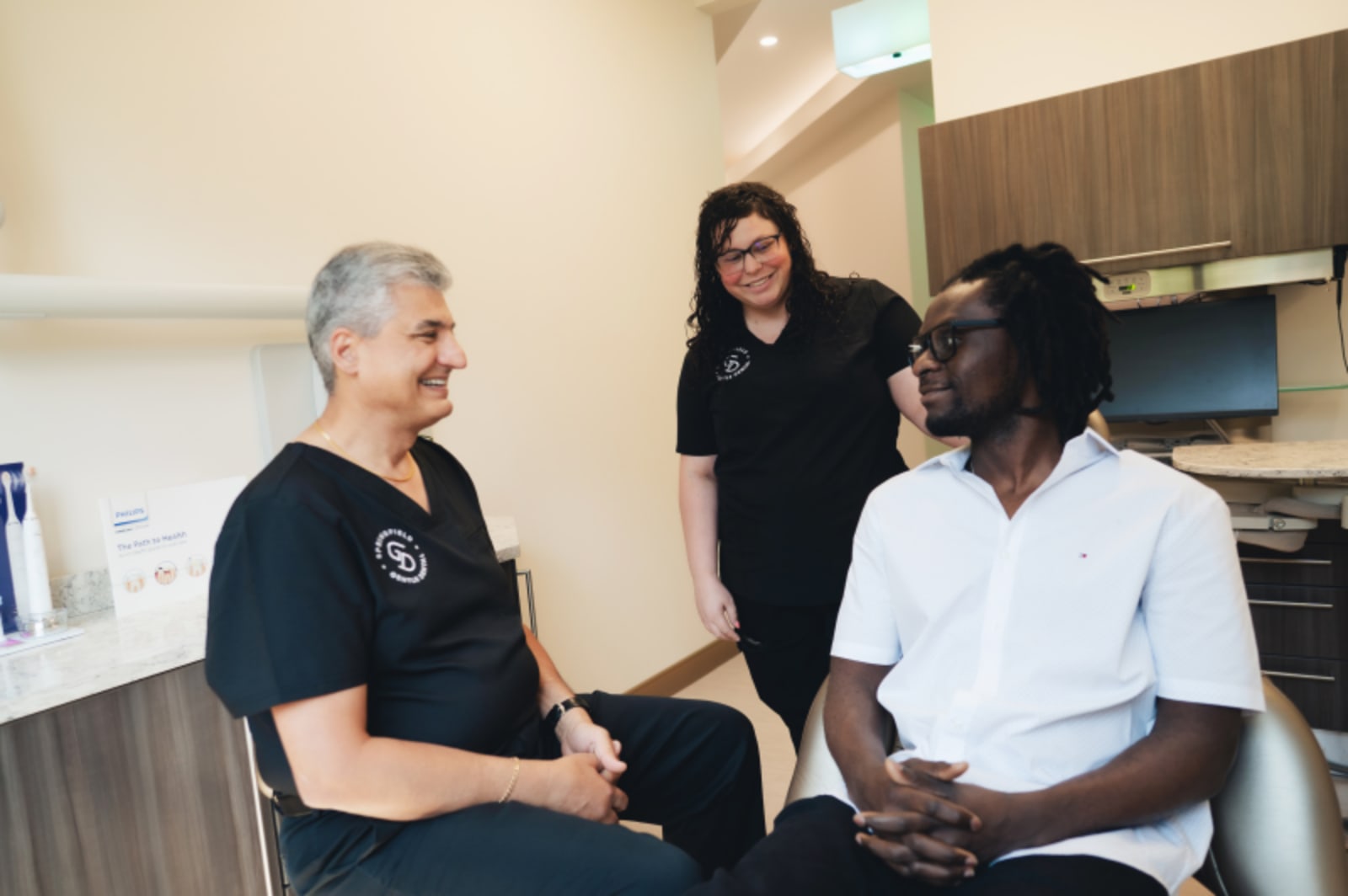
A typical implant-based plan can involve an oral surgeon for extractions, a specialist for placement, then a general dentist for the final restoration. That's three offices that may never speak to each other.
Here, all of that lives under one roof. Our doctors bring implant, surgical, and restorative expertise together, so your treatment gets built as one sequenced plan instead of a string of handoffs.
When implants are part of the plan, the sequence usually moves through these stages:
- A CBCT scan and full assessment to map your bone and plan placement precisely
- Any extractions or preparatory work, handled right here
- Implant placement, followed by scheduled healing checkpoints
- Scanning and fabrication of the abutment and crown once the implant has integrated
Cone beam imaging and current implant technology keep things accurate at every step. Because the same team follows you from that first scan to the day your crown goes in, you're never re-explaining your history to someone new. That CBCT data anchors the whole sequence, letting us plan placement, healing time, and the final restoration as one connected path. If you'd like to understand what that would look like for your situation, we're glad to walk through it with you.
How Long Full Mouth Reconstruction Takes
There's no single answer, because no two mouths are the same.
The number of teeth involved, whether implants are in the plan, how your body heals between phases, and the state of your bone and gums all shape the timeline. For implant-based reconstruction, it's reasonable to plan for anywhere from several months to roughly 12 to 18 months. Cases with multiple implants, bone considerations, or staged restorative work sit at the longer end, and that's just what lasting results take.
A few other things that factor into the overall picture:
- How many teeth are being restored or replaced
- Whether implants need a healing period before the final restoration
- How many phases the plan involves and how you heal between them
- Any groundwork first, like addressing gum or bone health
What doesn't change is that you'll have a clear, honest picture of the timeline before anything starts. The planning is the careful part, and getting it right is what keeps the whole process from feeling like it's dragging on forever.
Preparing and Caring for Your New Smile After Full Mouth Reconstruction
Getting ready for reconstruction starts with an honest conversation at your first visit. We'll take X-rays, do a thorough exam, and talk plainly about where things stand. Lasting results depend partly on you, and we'll be upfront about that. If certain habits or life circumstances contributed to the damage, working through them is part of making your treatment stick.
After each surgical step, our pain-management approach keeps most patients comfortable on over-the-counter ibuprofen and acetaminophen within about a day. Once your restorations are in, caring for them looks a lot like caring for natural teeth. Consistent brushing and flossing, regular cleanings, and protecting against grinding if that's a concern will go a long way. If something feels off between appointments, reach out and we'll help you figure out the next step.
Preparing and Caring for Your New Smile
Getting ready for reconstruction starts with an honest conversation at your first visit. We'll take X-rays, do a thorough exam, and talk plainly about where things stand. Lasting results depend partly on you, and we'll be upfront about that. If certain habits or life circumstances contributed to the damage, working through them is part of making your treatment stick.
After each surgical step, our pain-management approach keeps most patients comfortable on over-the-counter ibuprofen and acetaminophen within about a day. Once your restorations are in, caring for them looks a lot like caring for natural teeth. Consistent brushing and flossing, regular cleanings, and protecting against grinding if that's a concern will go a long way. If something feels off between appointments, reach out and we'll help you figure out the next step.
Cost and Financing
Full mouth reconstruction is a real investment, and the total varies from one person to the next. The main factors are how many implants are involved, which restorations you need, and whether any preparatory work like extractions or bone grafting comes first. Every case and every insurance plan is different, so quoting a number without the full picture would only set the wrong expectations.
Dental insurance won't cover an entire reconstruction as a single benefit, but many plans cover portions of the individual procedures inside it, things like exams, extractions, and certain crowns. That can bring your out-of-pocket costs down below what you might expect going in. We accept most PPO plans and are transparent about any network changes, giving patients six to eight months notice before we drop any insurance so there are never any surprises on that front.
For patients without traditional coverage, our in-house smile plan is designed to keep care accessible. It's a straightforward alternative that works well for people who need flexibility without the complexity of a standard insurance plan.
Why Springfield Patients Bring Us Their Complex Cases

Knowing your costs and plan upfront is half of what makes big treatment manageable. The other half is where the care happens and how many hands have to coordinate. As the largest dental practice in the Springfield area, grown over 30-plus years from a two-chair startup in 1993 into the facility we opened in 2024, we've built things so implant placement, oral surgery, and restorative work all get planned and completed in one place.
For anyone navigating multi-phase treatment, that matters. Full mouth reconstruction is something we genuinely specialize in, not an occasional add-on, which is why careful sequencing is the backbone of every case we take on. Dr. Nezhad's ongoing Kois Center education and Midwest Implant Institute training keep that planning grounded in biomechanical science rather than guesswork.
If you've been told your situation is complicated, this is the kind of place built to handle it. Our doctors and staff are local to Springfield, so when you come in, you're getting care from people who are genuinely part of this community.
Frequently Asked Questions About Full Mouth Reconstruction
How long does reconstruction take when implants are involved?
Implants need at least four months from placement to final crown, because the implant has to fuse with the bone before it can support a restoration. Factor that into a larger reconstruction and the timeline depends on how many procedures are involved and how they're sequenced. Good planning at the start is what keeps everything on track.
Can implants and the other restorations be done at the same practice?
Yes. We handle implant placement, crowns, and the restorative work around them right here. Bouncing between multiple offices adds time and creates communication gaps that can affect your outcome, which is exactly what we've built our practice to avoid.
How do I know if I need a full reconstruction or just a few procedures?
That's what a full evaluation is for. Some people expect the worst and need less than they feared. Others have more going on than they realized. You won't know until someone looks at the whole picture, not just the tooth that's bothering you.
Is it painful?
Pain is the worry we hear most often, and it's completely understandable. We make sure you're fully numb before anything starts, and most patients are comfortable on over-the-counter ibuprofen or acetaminophen within 24 hours of a surgical appointment. Coming here shouldn't feel like something to brace yourself for.
What if life circumstances contributed to the damage?
We start every case by understanding how things got here, and there's no judgment in that conversation. If certain habits or circumstances played a role, talking through them helps your treatment hold up over time. It's a conversation, not a lecture.
Will insurance help with any of it?
Often yes, at least in part. We'll go through your specific coverage at the consultation so you know what to expect before anything is scheduled.
Let's Start With a Conversation
Reading about reconstruction is one thing. Seeing what your own path looks like is another.
A consultation here isn't a commitment; it's a chance to sit down, talk through your options, and leave with a plan that actually makes sense for you.
Dr. Tab, Dr. Nezhad, and Dr. K coordinate on complex cases together, so every part of your treatment gets considered from the start.
When you're ready, give us a call at (937) 399-6177 and we'll find a time that works. We're open Monday through Thursday, 8:00 to 5:00, and Friday mornings until noon. Whatever shape your teeth are in right now, we'd love to help you figure out where things go from here.
we're ready to serve you
Step into your ideal dental experience and call (937) 399-6177 or request an appointment online to set up your first visit. We’ll be in touch soon.