
What Questions Should I Ask Before Getting Dental Implants?
If you're looking into dental implants, you've probably already done some reading. You know they look and function like real teeth and that with regular care, they can last for decades. What's harder to find are the questions that actually determine whether your case goes smoothly: Is your bone healthy enough to support an implant? What does the total cost look like across every appointment, not just the first one? And does the dentist you're considering have the specific training to handle your situation?
Most patients never think to ask those things, and they're the ones that matter most before you say yes. This article walks through five areas worth covering at your consultation: your dentist's training, the technology they use, what the timeline actually looks like, how costs are structured, and what risks are worth knowing about. At Springfield Gentle Dental, Dr. Tab and our team expect you to bring exactly those kinds of questions. Walk in with them covered and you'll have a much clearer sense of whether the plan being offered is the right one for you.
If you'd rather just talk it through, take a look at our doctors and their training or call us at (937) 399-6177 to schedule a consultation and we'll start there.
The Short Version Before We Get Into It
- Start with training. Implant placement is a surgical skill learned mostly after dental school. Ask your dentist where they trained, what the program involved, and how many cases they have done.
- A 3D scan is not a bonus. It is the baseline. A cone beam CT scan gives your dentist a full 3D picture of your jaw before anything is planned. If a practice skips it, that is worth asking about.
- Four months is about the minimum, not the finish line. Healing takes as long as your bone needs. Ask what your scan shows and what a realistic timeline looks like for your specific situation.
- The price you hear first is not always the full picture. Implant costs come in phases, with the surgical portion first and the crown later. Make sure you know what a quote covers before you agree to anything.
- A good dentist will bring up the risks before you have to ask. Things like bone density, smoking, and certain health conditions can affect how well an implant heals. You want a provider who talks through your specific situation, not just the general success rate.
The First Question Worth Asking: Who's Placing This?
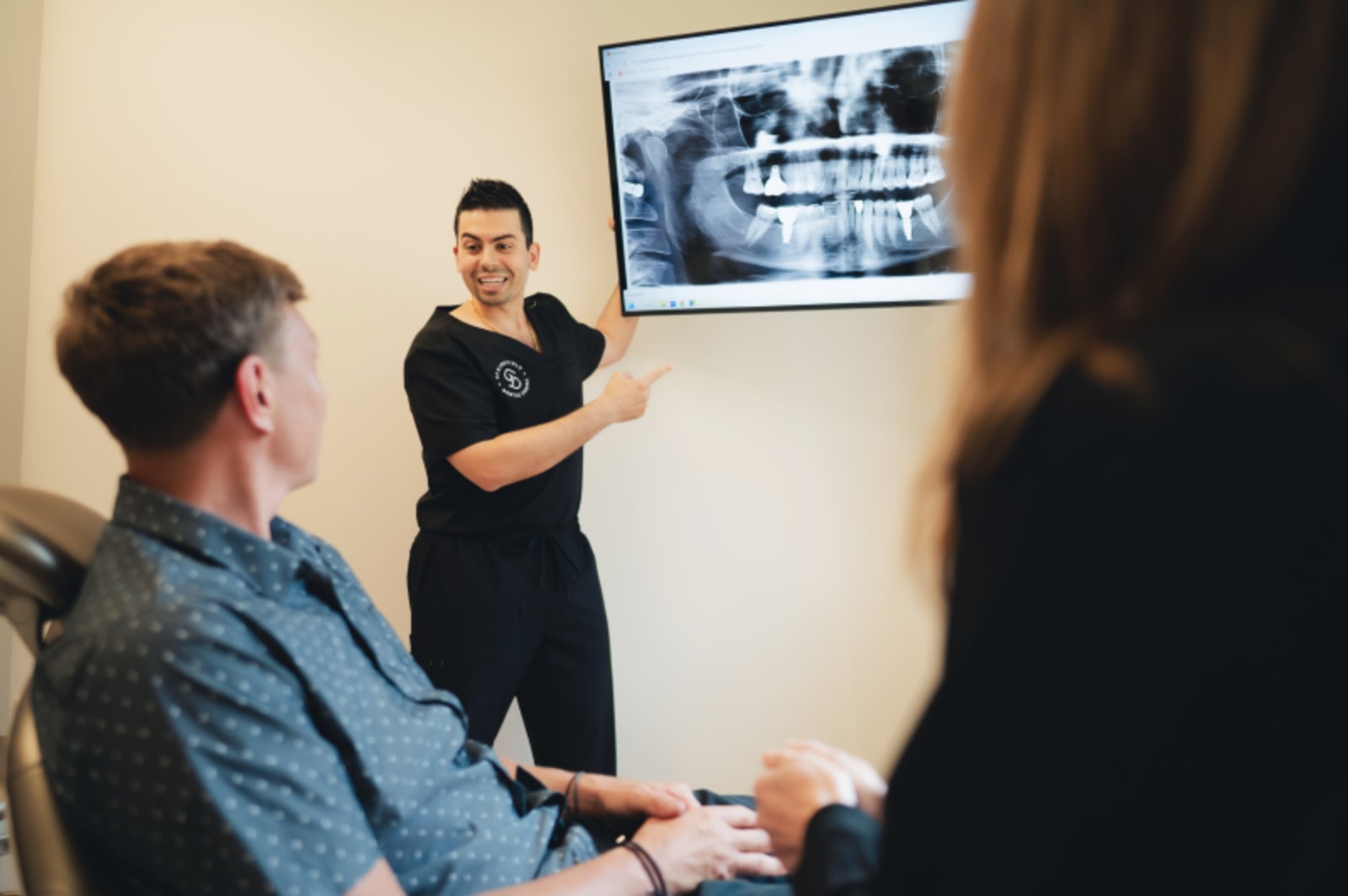
Dental school covers the basics, but implant placement is a surgical skill that develops through post-graduate training, supervised externships, and real case experience. Where a dentist trained after school matters more than most patients think to ask.
Placement angle, depth, and position all affect how an implant heals, how it functions, and how long it lasts. When you ask about training, you're not being difficult. You're asking the question that has the most bearing on your outcome. A specific answer is a good sign. A vague one is worth noting.
Did They Train Hands-On, or Just Sit Through a Course?
There's a real difference between a weekend lecture with a certificate and a structured fellowship or externship where you're actually placing implants under supervision. Ask what the training involved, not just where it was.
Are They Thinking About the Whole Tooth, Not Just the Post?
The implant post that goes into your jaw is only part of the picture. On top of that goes an abutment, a small connector piece, and then the crown, which is the part that actually looks and functions like a tooth. That crown has to fit your bite correctly and hold up for years. A dentist with advanced training in restorative planning is thinking about all of that from the very first appointment, not just the surgery itself.
Have They Done This Consistently, Not Just Occasionally?
Good training and real case experience together are what you want. One without the other leaves a gap that can show up in your outcome. Knowing what to ask is most of the work, and these are the right questions to bring into any conversation about implants.
The Tools Behind the Plan Matter More Than You'd Think

Ask whether they use a cone beam CT scan before placing your implant. Unlike a standard X-ray, a cone beam CT scan, also called 3D imaging, shows the full three-dimensional shape of your jaw: bone volume, nerve location, and sinus position. That's what allows your dentist to build a plan around your actual anatomy rather than a general estimate. Every implant case at our practice starts with one.
Then ask how that scan is used to plan the surgery. Two things are worth asking about by name:
- Digital Treatment Planning. Your dentist should be mapping out exactly where the implant will sit, the angle, the depth, the position, before you're ever in the chair. If the plan is being figured out in the moment, that's worth knowing.
- Guided Placement. The digital plan can actually guide the surgery itself, so the implant goes in precisely where it was planned to go. It's a meaningful step up from freehand technique and one of the clearest signs a practice is investing in accuracy.
Finally, ask how they take impressions for your crown. Practices using digital impression scanning skip the trays and goopy material entirely. An iTero scanner takes a precise digital mold of your mouth in minutes. It's a small detail, but it's the kind of thing that tells you whether a practice is keeping up with where dentistry actually is. Keep in mind that the equipment is only as good as the person using it, so the tools and the training really do go hand in hand.
What to Ask About the Timeline Before You Commit
Most patients want a straight answer on how long this takes. The honest answer is that it depends on your jaw, but the process follows a consistent path. Knowing what to ask at each stage helps you plan realistically and avoid surprises.
Do I Need Any Prep Work Before the Implant Goes In?
The process starts with an exam and a 3D cone beam scan of your jaw. That scan gives your dentist a detailed picture of your bone volume, nerve location, and sinus position. From there, they can tell whether you need anything done first, such as a tooth extraction, bone grafting, or treatment for an existing infection. A lot of patients don't need any of it.
How Will You Know the Implant Has Healed Properly?
After the implant post is placed into your jawbone, your body does the work. The bone gradually grows around the post and locks it in, a process called osseointegration. Think of it as your jaw naturally fusing with something stable. This part cannot be rushed, and it is the biggest reason timelines vary from person to person. Your dentist will confirm that fusion is solid before moving forward, so ask how they verify that and what happens if healing takes longer than expected.
What Does the Final Restoration Look Like for My Situation?
Once healing is confirmed, the visible part of your new tooth gets built. A small connector piece called an abutment attaches to the top of the implant post, and the crown sits on top of that. The crown is what actually looks and functions like a tooth. If you are replacing several teeth rather than just one, ask about options like implant-supported dentures, All-on-4, or All-on-6, which use a small number of implants to support a full arch of teeth.
Cost Comes in Phases. Here's How to Ask About All of Them

Implant costs are split across phases, so a quote at your consultation may only cover part of the total. Before you leave, ask:
- Does this number cover every phase, including placement, the abutment, and the crown?
- What happens to the cost if healing takes longer than expected?
- Can payments be spread out over time?
- Will my dental insurance cover any part of this?
We can't give you a real number until we've seen your scan and know what your situation involves. What we can tell you is that we walk through all of it before anything starts. We accept most PPO plans, offer an in-house smile plan for patients without insurance, and if cost is the main thing holding you back, just say so when you call. It's usually a more workable problem than people expect.
A Good Provider Will Name the Risks. Here Is What They Should Cover.
Every dentist will tell you implants have a great track record. That's true. But a provider worth trusting won't stop there. They'll walk through the specific factors in your situation that could affect how well the implant heals and how long it lasts. That conversation should feel personal, not like a disclaimer being read off a form.
Here are the things that genuinely affect outcomes and should come up before anything is placed:
- Smoking slows healing significantly and makes it harder for the bone to fuse with the implant. It's one of the biggest risk factors, and your provider should bring it up directly.
- Bone density matters because the implant post needs solid bone to anchor into. If there isn't enough, that doesn't automatically disqualify you, but it does change the plan.
- Certain health conditions, like diabetes, can slow your body's healing response. That doesn't mean implants aren't an option, but it's something your provider needs to factor in from the start.
- Daily hygiene habits matter more than most people expect. An implant lives in your mouth just like a natural tooth does, and how well you care for it day to day has a real effect on how long it lasts.
If an implant does fail, it's usually not the end of the story. In many cases the area heals and can be re-evaluated for another attempt. What matters most is understanding why it happened, which is exactly why the assessment before placement is so important. If bone loss is the issue, a bone or sinus graft can often rebuild enough of a foundation to move forward. Your provider should be able to tell you from your scan whether that's a likely part of your path.
Come In With Questions. Leave With a Plan.
When you come in, you are not walking into a corporate office where someone reads from a script. You are sitting down with people who genuinely want to help you figure out what is going on and what your options are. There is no judgment about where your teeth have been.
Here is one thing to keep in mind after any implant consultation: pay attention to how specific the answers were. Dr. Nezhad will reference your scan, your bone density, and your actual timeline because that is what a real plan looks like. A dentist who simply says "you're a great candidate, this will go smoothly" without backing it up is giving you a sales pitch.
What you want to walk away with are real answers tied to your situation, covering what your imaging showed, what your timeline looks like, what the total cost covers, and what risks apply to you specifically. If any of those felt glossed over, it is worth going back and asking again before you say yes.
You can get to know our doctors and their training before you come in, or just call (937) 399-6177 and we will set up a consultation, scan included.
we're ready to serve you
Step into your ideal dental experience and call (937) 399-6177 or request an appointment online to set up your first visit. We’ll be in touch soon.