CPAP or an Oral Appliance? Sorting Out Which One Actually Fits Your Life
If your CPAP has ended up in a closet, you're probably already asking the right question: is there another way to treat sleep apnea, and how does it compare?
Both CPAP and oral appliances are proven treatments for obstructive sleep apnea. CPAP tends to win on paper, especially for severe cases. Oral appliances often win in real life for milder cases, because people actually keep using them. The best treatment isn't the one that scores highest in a study. It's the one you'll still be using six months from now.
Dr. Bingham and the team at Springfield Gentle Dental start by understanding what's going on with your sleep, then help you figure out your real options. Because we bring many services together in one practice, you won't need to piece your care together across multiple offices. Whatever your situation calls for, our doctors are here to help.
To talk it through, call us at (937) 399-6177.
The Short Version
- An oral appliance is a custom mouthpiece that gently shifts your jaw forward while you sleep. It's proven for mild-to-moderate cases and much easier for most people to use.
- Whether a treatment works comes down to whether you use it. CPAP is effective in studies, but many patients struggle to keep up with it long term.
- Both options are typically billed through medical insurance, not dental, because sleep apnea is a medical condition. What your plan covers depends on your diagnosis and policy, so check your benefits before starting.
- The right fit depends on your sleep study results, your anatomy, and your lifestyle. Your sleep physician and dental provider work through that decision with you.
How Each Treatment Actually Works
They tackle the same problem from opposite directions, and that difference is a big part of what makes one a better fit for you.
CPAP delivers a steady stream of pressurized air through a mask worn over your nose or mouth. That airflow works like a gentle splint, holding your airway open so it can't collapse overnight. It's effective. But the mask, the hose, the hum of the machine, and staying in one sleeping position all add up, and staying consistent trips up a real chunk of patients.
An oral appliance works differently. It's a custom-fitted mouthpiece, sometimes called a mandibular advancement device, that nudges your lower jaw slightly forward while you sleep. That small shift brings your tongue and surrounding soft tissue along with it, which keeps your airway from narrowing or collapsing. No machine, no mask, nothing to plug in. You slip it in the same way you'd wear a night guard.
Both treatments chase the same target: an airway that loses its shape during sleep. One props it open with pressure. The other holds it open by repositioning your jaw.
What the Clinical Evidence Actually Says
CPAP earns its standing on the numbers. In controlled settings, it produces bigger reductions in apnea-hypopnea index scores (the AHI, which counts how many times your breathing pauses or gets shallow each hour) than any other non-surgical option. When worn faithfully and tolerated well, it does a remarkable job of keeping the airway open all night.
Here's the wrinkle: "most effective in a study" and "most effective for you specifically" are two different questions. Oral appliances are well-studied and proven for mild-to-moderate cases, with solid research behind them. Head-to-head, CPAP tends to deliver larger reductions in AHI scores, while a well-fitted oral appliance produces real, measurable improvements for milder cases.
For severe cases, CPAP stays the first recommendation. But effectiveness isn't a single number. It hinges on severity, your anatomy, and your daily life.
For many people with mild-to-moderate sleep apnea, an appliance can produce outcomes that are comparable in practice. The numbers alone don't settle the question. The right answer depends on the full picture of who you are and how you sleep.
Why Compliance Quietly Decides Everything
Not using CPAP consistently is one of the most common problems in all of sleep medicine, and it's rarely about willpower. The reasons people struggle are understandable:
- The mask presses and rubs, especially rough for side sleepers.
- The noise keeps both the patient and their partner up.
- Claustrophobia can make wearing a mask all night distressing.
- Travel gets complicated, since the machine needs power and luggage space.
- Dryness, skin irritation, and pressure marks add up over time.
An oral appliance sidesteps most of that. It's small enough to pocket, needs no power, makes no sound, and most people find it far easier to live with. It isn't right for every severity level. But for anyone whose sleep apnea falls on the milder end, or anyone who has tried CPAP and can't stay with it, an appliance that gets worn beats a machine that doesn't.
If you've been prescribed CPAP and can't tolerate it, that's not a personal failure. It's a sign worth bringing up with your care team. The goal is sleep apnea that's actually being treated.
Cost and Insurance: What to Expect
What treatment costs depends on more variables than any article can settle, but knowing how billing breaks down helps you walk in prepared.
CPAP typically involves a few separate costs:
- The machine itself, which insurers classify as medical equipment rather than a dental device.
- Ongoing supplies like masks, tubing, and filters that need regular replacing.
- Any sleep study costs, often required before treatment is approved.
Oral appliances work differently. Because they're custom-made, there's a one-time cost to design and fabricate the device instead of recurring supply expenses.
Here's the part that catches people off guard: because sleep apnea is a medical condition, both CPAP and oral appliances are usually billed through medical insurance rather than dental benefits. That means your dental plan may not cover either option. Coverage depends on your diagnosis, your policy, and whether your provider is in-network.
Verify your own coverage before assuming anything. A practice that handles sleep apnea regularly can help, because submitting medical claims from a dental office requires specific experience. We accept most PPO plans, and we have an in-house smile plan to help with costs insurance doesn't cover. We go over the financial details before treatment starts, so nothing comes as a surprise.
When CPAP Is Still the Better Call
Being upfront means telling you when an oral appliance isn't the right fit. Sometimes CPAP is simply the better tool, and that's worth saying clearly.
Severity matters a lot here. When your breathing interruptions are frequent and significant, the airway needs more support than a mouthpiece can reliably provide. Appliances work by shifting your jaw forward, but there's a ceiling to how much that helps, and a sleep physician may determine CPAP is the only option that can get you where your health needs to be.
Then there are patients who've been on CPAP for years, adjusted to it, and use it every night without issue. For them, switching isn't automatically better. If it's working and you're sleeping well, that result is worth keeping.
Some patients use both at once. Wearing an appliance alongside CPAP can allow the machine to run at a lower pressure setting, which some people find easier to tolerate through the night.
This decision belongs to your sleep physician and your dental provider together. Your test results, health history, and jaw anatomy all factor in. Our team is happy to work alongside your physician whenever a coordinated plan serves you best.
Figuring Out Which Option Fits You
The right path starts with a proper sleep study. Whether done in a lab or at home with a take-home test, the results give you a severity score that tells you and your care team how significant the obstruction really is. Without that baseline, any treatment talk is guesswork.
Once you have that number, things get clearer. Strong candidates for an oral appliance usually fall into one of these groups:
- Those diagnosed with mild-to-moderate obstructive sleep apnea.
- Those who've tried CPAP and found it too hard to use consistently.
- Those whose sleep physician has suggested exploring an appliance as part of a bigger plan.
The dental side is more involved than most people expect. You're not grabbing a device off a shelf. Our team takes detailed impressions of your teeth, fits the appliance carefully to your bite, and adjusts it over time as your jaw settles into the new position.
That ongoing fine-tuning is what separates an appliance that truly works from one you merely put up with. Having advanced imaging and scanning in-house means we can plan that fit precisely from the start.
Let's Talk Through Your Options
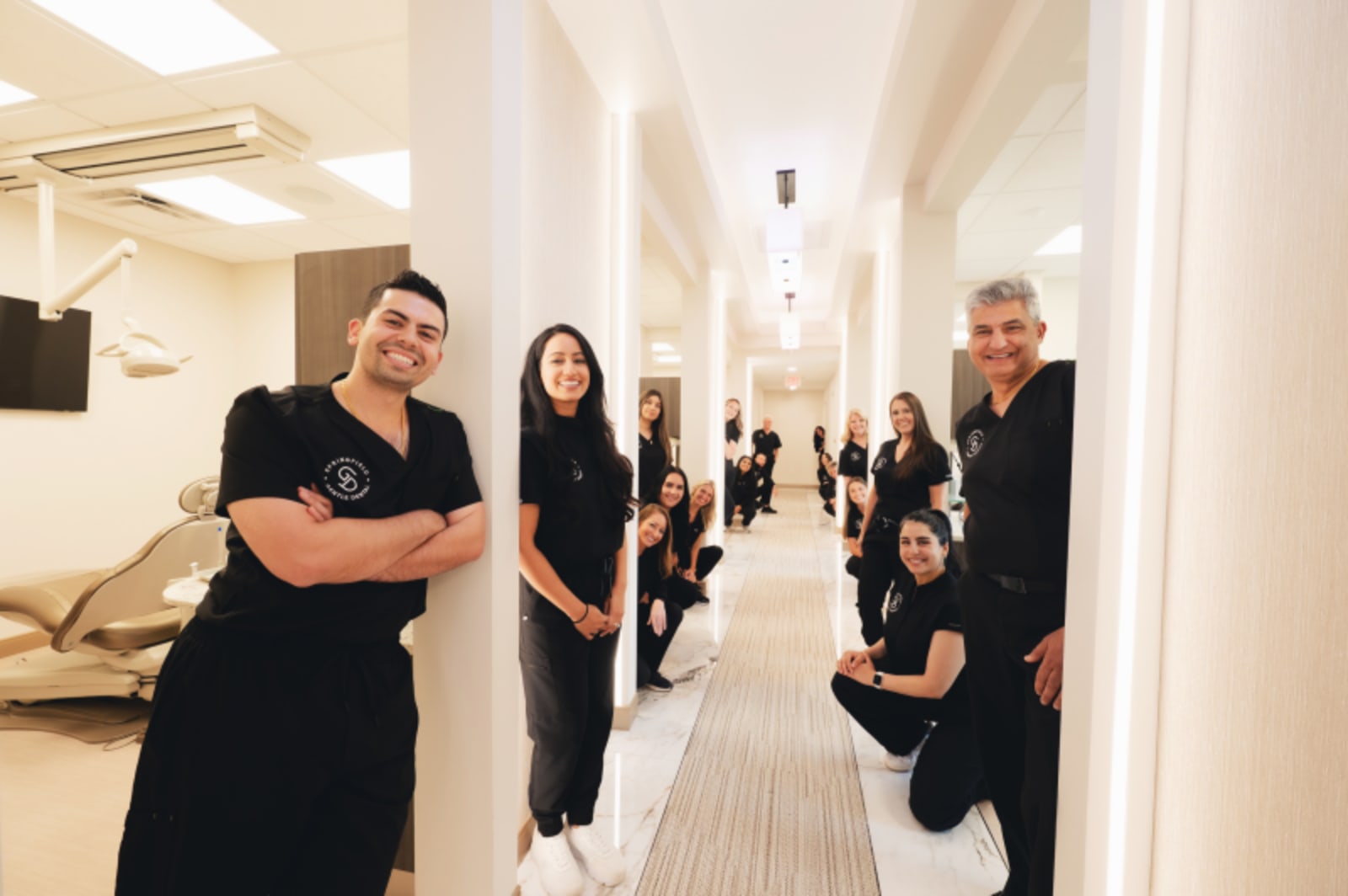
If you've read this far, chances are CPAP hasn't been the answer for you, or you're still early in figuring out what makes sense. A lot of people put off treating sleep apnea for years because the one option they knew about never felt like a fit for their life.
Our team offers oral appliance therapy right here in Springfield, and it's worth a real conversation. You don't need everything figured out before you call.
Our doctors are here to help, and we're open Monday through Thursday from 8:00 to 5:00 and Friday mornings until noon.
When you're ready, call us at (937) 399-6177 and we'll help you find what actually works for your sleep.
we're ready to serve you
Step into your ideal dental experience and call (937) 399-6177 or request an appointment online to set up your first visit. We’ll be in touch soon.
