Signs You Need Bone Grafting Before Dental Implants
You come in ready to talk implants, and then bone grafting enters the conversation. It can feel like a detour, but it usually isn't. Bone loss happens quietly over months or years after a tooth is lost, and many patients have no idea it's been building until a scan shows it. A graft simply rebuilds the foundation your implant needs to hold.
This article walks through why bone loss happens, what signs to watch for, and what the evaluation process actually looks like. Dr. Nezhad, Dr. Tab, and Dr. K handle bone and sinus grafting alongside implant placement right here at Springfield Gentle Dental, so a more complex case never means a referral out.
If you'd rather talk it through than read about it, call us at (937) 399-6177.
What to Know First
- Grafting comes up when your jaw no longer has enough bone to hold a dental implant firmly in place.
- That loss usually traces back to tooth loss, gum disease, an old jaw injury, or years of wearing dentures.
- Everyday clues like a sunken jawline, dentures that rock, a flatter gum ridge, or chewing that's gotten harder can point to it. A 3D CBCT scan is what actually confirms it.
- It changes the sequence and adds healing time before the implant goes in, but it does not change the destination.
- Upper back teeth sit near the sinus cavity, which sometimes calls for a sinus lift rather than a standard graft. More on that below.
Why Jawbone Disappears in the First Place
Your jawbone is not a fixed shelf that holds teeth in place. It is living tissue that responds to pressure. Every time you bite or chew, your tooth roots send a small signal down into the bone, and the bone holds its density and shape because of that steady stimulation.
Remove the tooth and that signal stops. The body starts breaking down bone it no longer needs, and the ridge where the tooth used to sit slowly narrows and flattens. That is normal biology, not evidence that you neglected your smile.
A few things tend to start the process:
- An unreplaced tooth. Once a gap has been open a year or more, bone loss has had real time to progress. Nothing is sending that signal into the bone anymore, which is why dental implants are often the first thing we talk through.
- Advanced gum disease. Periodontal infection eats away at supporting bone even while the tooth is still in place, so the loss can be well underway before anything falls out.
- Trauma. A blow to the jaw or face can damage the bone structure itself, sometimes in ways that only show up on imaging years later. If you've had one, our oral surgery team can take a closer look.
- Long-term denture wear. Dentures sit on top of the gum. They restore chewing, but they do not send stimulation into the bone the way roots do, so the ridge underneath keeps shrinking year after year.
Signs Bone Loss May Already Be a Factor
Most of the clearest signals turn up long before anyone sits in a consultation chair. They come on gradually enough that people adapt without noticing. These are worth a second look:
- A sunken or slightly collapsed look around the jaw and lower face, often most obvious in profile or in older photos.
- Dentures that used to fit well but now shift, rock, or need noticeably more adhesive than they did a year or two ago.
- A gum ridge that looks flatter, thinner, or lower than you remember when you run your tongue along it.
- Chewing that's gotten harder, particularly with foods that never used to give you trouble.
- Neighboring teeth drifting or tipping toward an old gap, which changes how your bite comes together.
None of this means you should diagnose yourself or rule out dental implants. These are simply good reasons to have someone look beneath the surface.
What Shows Up Once We Image the Jaw
A few findings determine whether a standard implant will hold on its own:
- Low bone density at the spot where the implant would go.
- Not enough room in the jaw to place an implant with solid bone on all sides of it.
- A history of significant gum disease that has already damaged the bone around your teeth.
- A nerve or sinus sitting too close, which limits how deep an implant can safely go.
What the Evaluation Actually Looks Like
1. The CBCT Scan
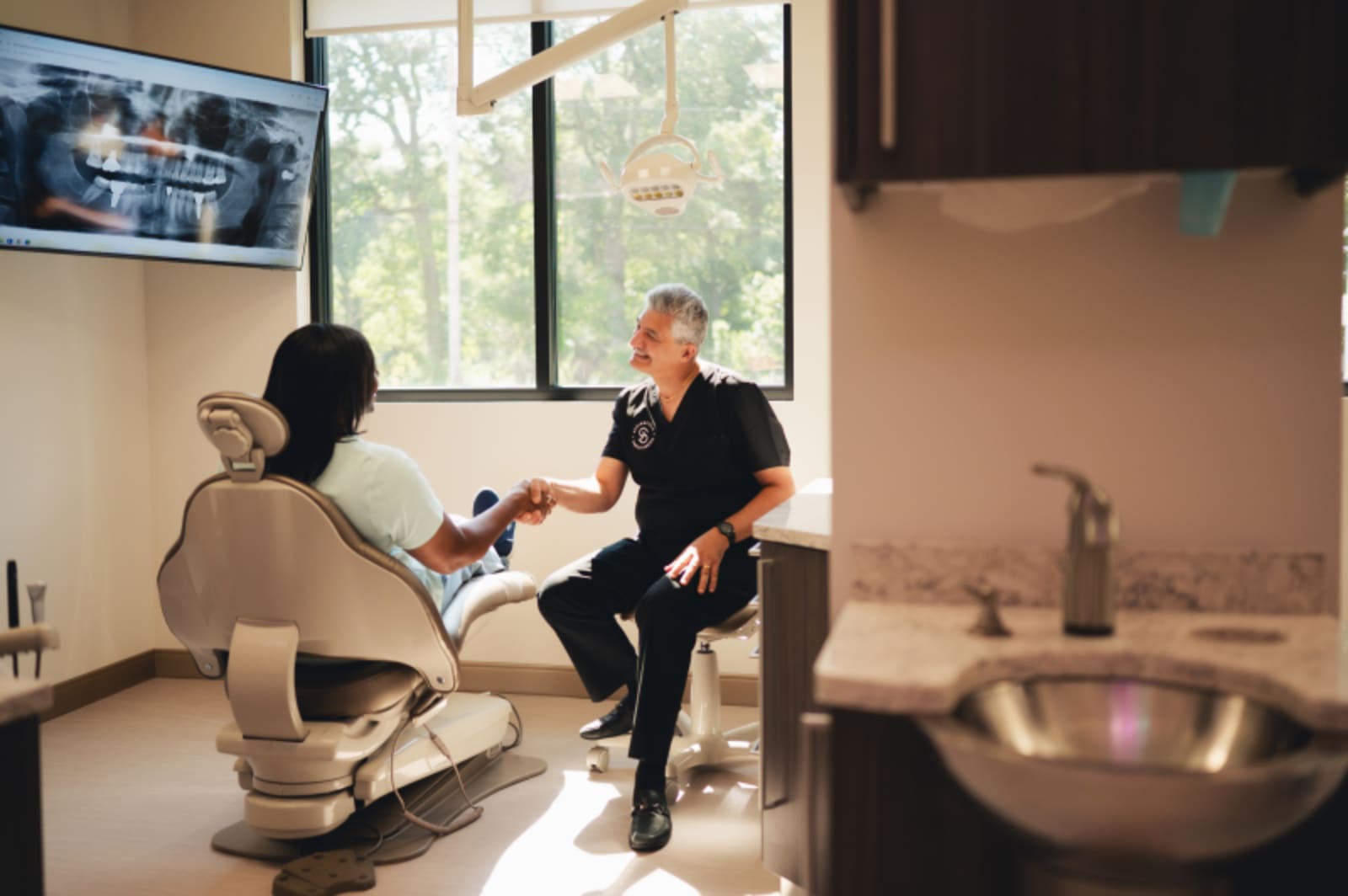
It starts with a 3D cone beam CT scan, which is a special imaging tool that gives us a full three-dimensional picture of your jaw. A regular dental X-ray is flat, like a photograph. A CBCT is more like a map, showing precise measurements of bone height, width, and density right where an implant is being considered. That detail matters because bone loss is almost never even.
2. Your Health and Dental History
Next we go through your medical and dental history. Health conditions, medications, smoking, and past dental work all affect how bone heals and how your body handles surgery. Some change the plan, some just shift the timeline, and it's better to know before anything starts than to discover it midway.
3. Deciding Which Kind of Graft Fits
The evaluation answers a more specific question than most people expect. Not just whether grafting is needed, but which type. The three that come up most:
- Socket preservation. Placed at the time of a tooth removal to hold the space open and protect the ridge while the site heals. This one prevents a problem instead of correcting one, which is why we bring it up when a tooth is coming out and an implant is anywhere in your future.
- Ridge augmentation. Used to rebuild width or height in a site that has already lost bone, typically where a gap has been open for a while.
- Sinus lift. Reserved for upper back teeth, where the sinus cavity sits close to the jaw and limits how much bone is available.
Each one solves a different problem, and choosing the right one depends on your specific anatomy and the training behind that decision. Dr. Nezhad brings his Midwest Implant Institute externship and his ongoing coursework at the Kois Center into that planning. Dr. K has been placing dental implants since his surgical training and brings that same depth to every case. Between them, the choice gets made carefully rather than by default.
How Grafting Works, Plainly
Graft material is placed into the site where bone is thin. Think of it as a scaffold, holding the space open and giving your own cells a framework to grow into. Over the following months your body builds new bone around and through that material, gradually filling in the site. Healing before implant placement can run anywhere from a few months to longer, depending on how much rebuilding is needed.
Comfort is usually the first question patients ask. Our approach is the same for any surgical procedure, starting with complete numbing before we begin, and a pain management plan that keeps most patients on ibuprofen and Tylenol within about a day.
The Upper Jaw Has Its Own Quirk
Your upper back molars sit just below an air-filled cavity in your skull called the sinus. When those teeth are lost, that cavity tends to drop downward into the space, leaving a thin shelf of bone where an implant needs to anchor. Placing an implant there without addressing it first undermines the result.
A sinus lift, sometimes called sinus augmentation, raises the sinus floor and adds graft material underneath to create the vertical height a stable implant needs. It sounds far more involved than it feels for most patients.
This is worth knowing before your dental implant planning appointment, because "bone grafting" can mean quite different things depending on which part of your mouth we are working in. Dr. Nezhad and Dr. K both handle this here in Springfield.
Grafting Adds Time, and That's the Point
When a plan includes a step you weren't expecting, the reaction is usually the same: this feels like a setback. More appointments, more healing, more cost on top of something that already felt like a big commitment. That reaction deserves a straight answer.
A dental implant works because bone grows tightly around the titanium post and locks it in place. Put an implant into bone that is too thin or soft to hold it and the implant will not integrate properly. Grafting rebuilds that foundation first, so the implant has solid bone to anchor into.
Skipping a needed graft to save a few months is frequently what leads to a failed implant. A failed implant means starting over, often with more grafting than would have been needed the first time. Plenty of people scan clean and go straight to placement without needing one at all. Weigh the extra months against what they give you: an implant with the structural support to last the way it should, potentially for the rest of your life.
FAQs About Bone Grafting
Does Needing a Bone Graft Mean I Can't Get Implants?
No. In most cases, a bone graft is what makes the implant possible. It prepares the jaw so the implant has solid bone to anchor into. Needing one does not disqualify you.
Can I Tell on My Own Whether I Need One?
Not reliably. Outward signs like a shifting bite or loose dentures are useful clues, but only a 3D scan gives a clear picture of what is actually happening in the bone. A consultation is the right starting point.
Can Grafting Happen at the Same Time as the Implant?
Sometimes. Minor bone loss can be addressed at the same appointment as implant placement. More significant loss requires a separate grafting procedure with healing time before the implant goes in. Your scan determines which applies to you.
What Does It Cost?
Cost depends on the extent of grafting needed and your insurance coverage. We review the full treatment cost with you before anything begins so there are no surprises. Springfield Gentle Dental accepts most PPO plans and offers an in-house smile plan for patients without insurance.
If You're Not Sure Where You Stand

Most people who come in for an implant consultation have no idea yet whether grafting is part of their picture, and that's exactly how it should be.
Whatever your scan shows, our doctors will explain what it means in plain language, walk you through each step, and let you decide from there. Call us at (937) 399-6177 whenever you'd like a clear picture of where your jaw actually stands.
we're ready to serve you
Step into your ideal dental experience and call (937) 399-6177 or request an appointment online to set up your first visit. We’ll be in touch soon.